The Ultimate Guide to EPA ALT-152
ALT-152 is a United States Environmental Protection Agency-approved alternative method for obtaining EPA Method 9 certification. Instead of attending a traditional in-person smoke school, observers complete the training using a virtual reality headset. Method 9 certifications earned through ALT-152 are identical to those obtained at a conventional in-person smoke school.
ALT-152 Adds to EPA Method 9
ALT-152 does not change how EPA Method 9 observations are performed - it only changes the method used to obtain certification. EPA Method 9 does not explicitly require certification to occur at an in-person smoke school; rather, this requirement has historically been implied. Because EPA Method 9 was written in the 1970s, the authors could not have anticipated the development of virtual reality technology.
ALT-152 defines the procedures and requirements for obtaining EPA Method 9 certification using a virtual reality headset, effectively expanding EPA Method 9 by introducing a new certification method.
What Does ALT-152 Establish?
ALT-152 establishes the technical requirements for providers who wish to provide EPA Method 9 certification using a virtual smoke school. These requirements must be met by the virtual smoke school provider, not the student. Some of these requirements include:
- Technical specifications for the smoke generator that is used for creating test videos.
- Technical requirements for video recording such as white balance reference, sun location, angle to smoke generator and depth of field.
- Technical requirements for the virtual reality headsets that can be used, including resolution, refresh rate and field of view.
- Technical requirements for test videos presented to the student, including resolution, frame rate & quality.
- Requirements for the virtual visual test including video length, randomness, test duration limit and grading.
- Requirements for record keeping student data.
What Does ALT-152 Change from The Student's Perspective?
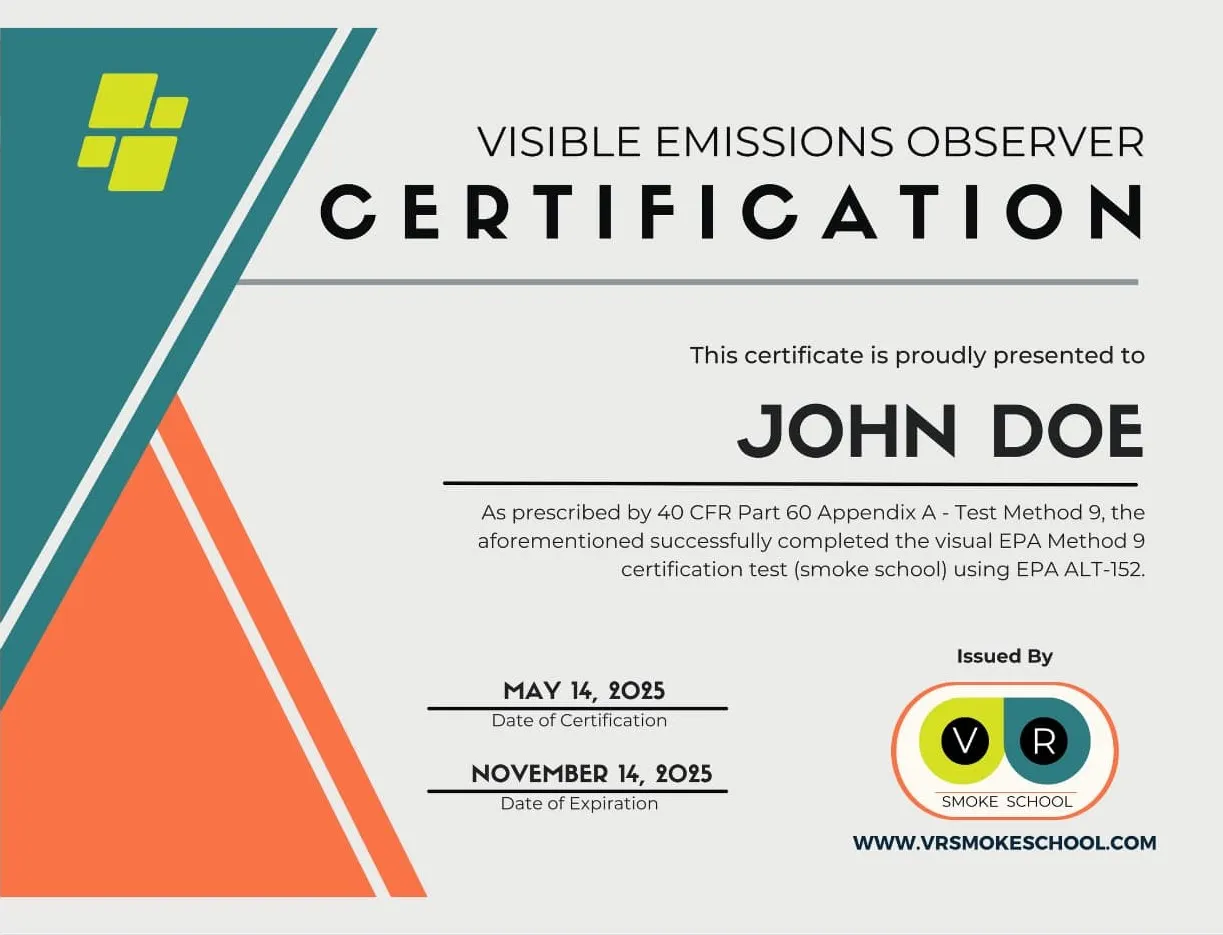
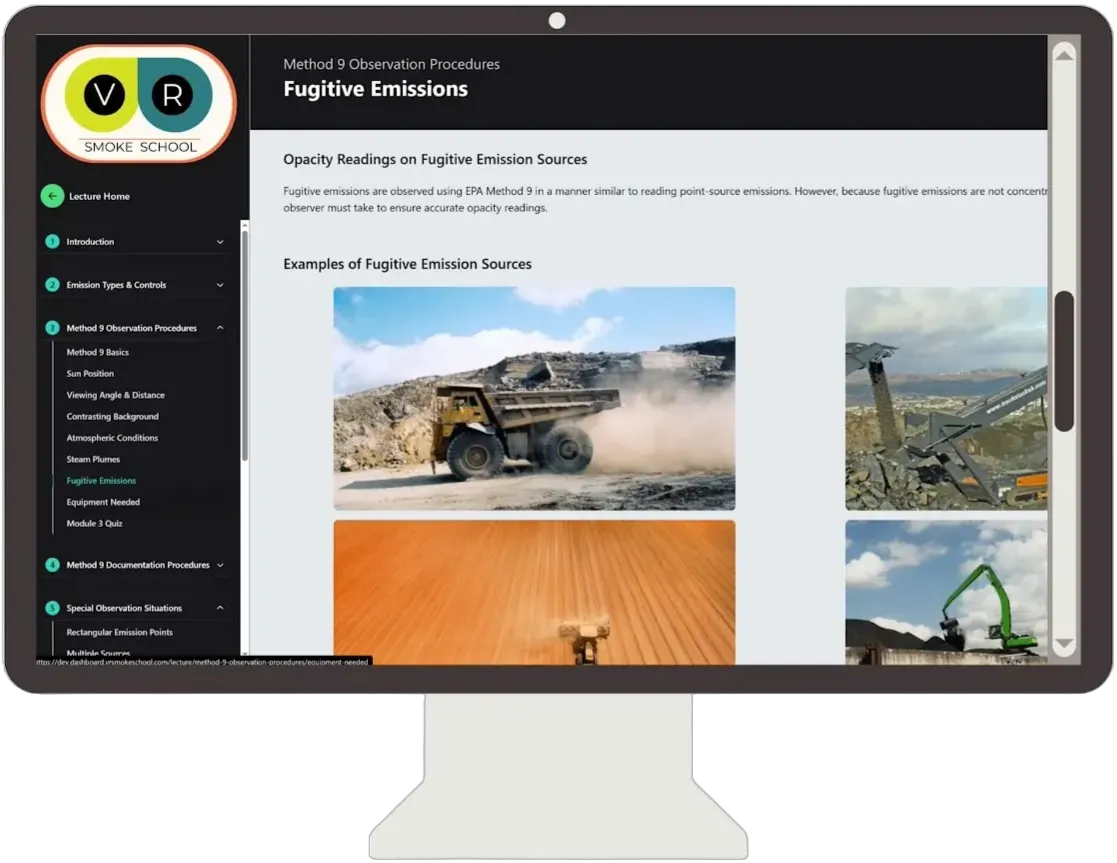
Aside from the ability to earn EPA Method 9 certification using a virtual reality headset, the only change for students is that the lecture material must be reviewed as part of the initial certification process. EPA Method 9 recommends reviewing the lecture, while ALT-152 requires it for students obtaining their EPA Method 9 certification for the first time.
If you previously completed the lecture as part of an in-person smoke school, you do not need to review it again for VR Smoke School. The VR Smoke School program provides access to a comprehensive online lecture at no cost, and students can print a certificate as proof of completion.
Testing & Grading Remain the Same
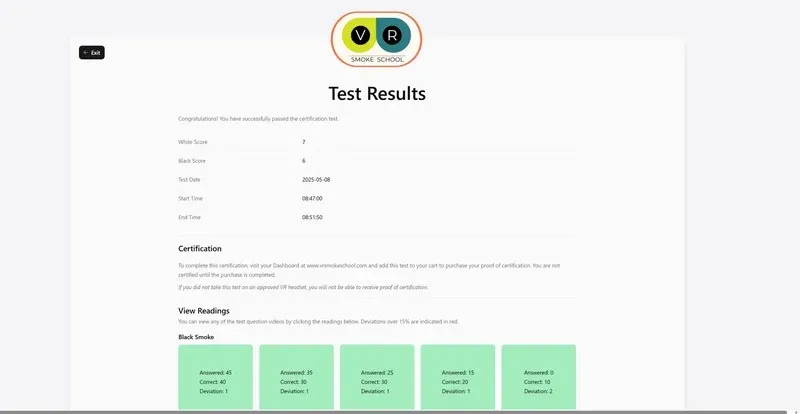
ALT-152 testing requirements are identical to in-person testing requirements. Students must make 25 observations of white smoke and 25 observations of black smoke for virtual smoke school and in-person smoke school. The grading criteria is also the same.
The EPA Approval Process for ALT-152 Providers
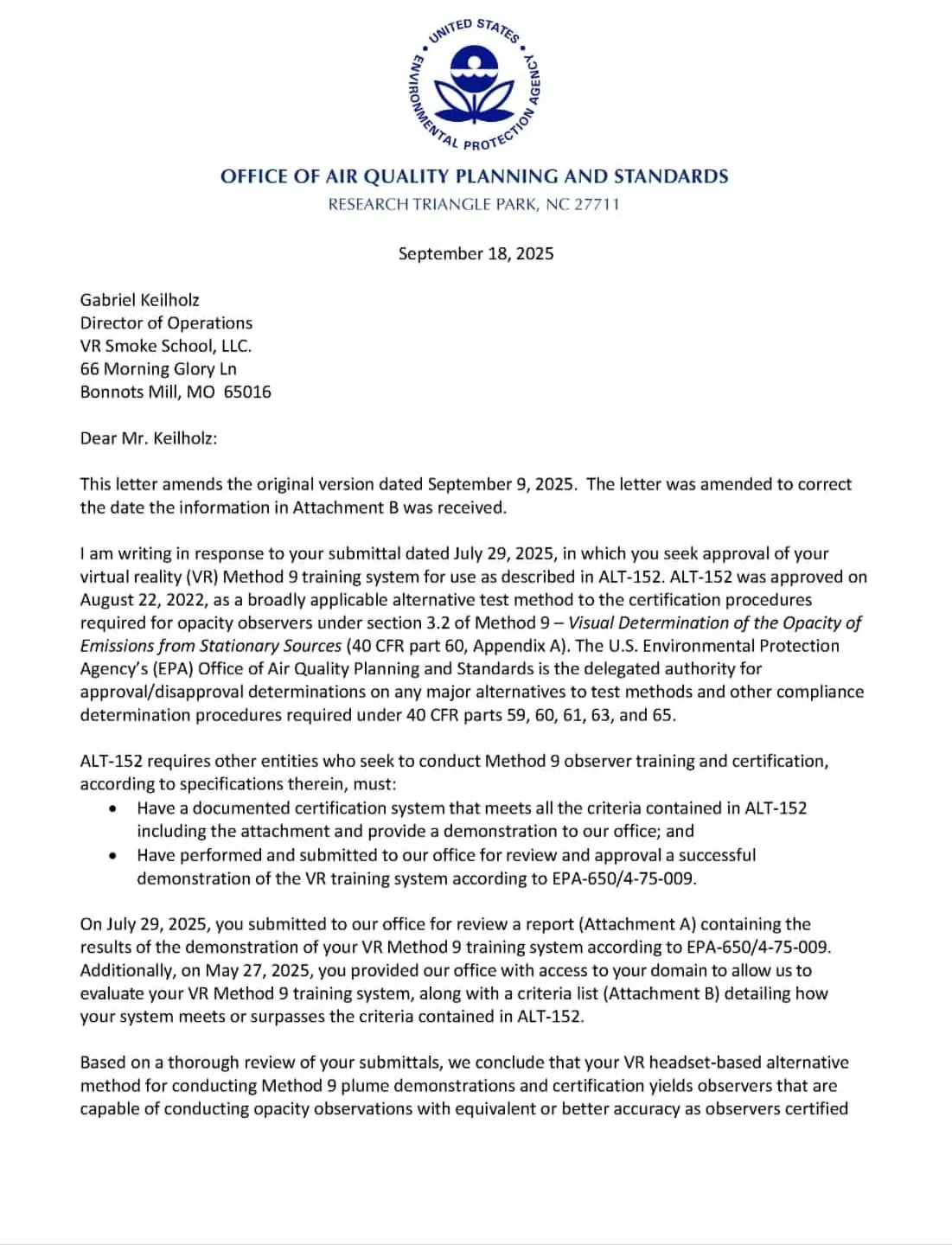
The USEPA approves each ALT-152 provider individually. When a provider is approved, they receive a designation such as ALT-152A, ALT-152B, ALT-152C, and so on.
In addition to meeting extensive requirements for smoke generation, video quality, hardware, and record-keeping, each ALT-152 provider must conduct a study demonstrating that their program is equivalent to traditional in-person smoke school training.
As part of this study, providers train and certify students using their virtual smoke school program and then evaluate those students' opacity observation skills during live, in-person smoke events. Students must observe more than 8,000 real smoke plumes using only the training they received through the virtual smoke school. The accuracy of these observations is then compared with the performance of students trained at in-person smoke schools in a 1975 EPA study associated with EPA Method 9.
In our VR Smoke School study, students observed white smoke plumes with 55% greater accuracy and black smoke plumes with 25% greater accuracy than students trained at traditional in-person smoke schools.
No Virtual Reality Experience is Needed
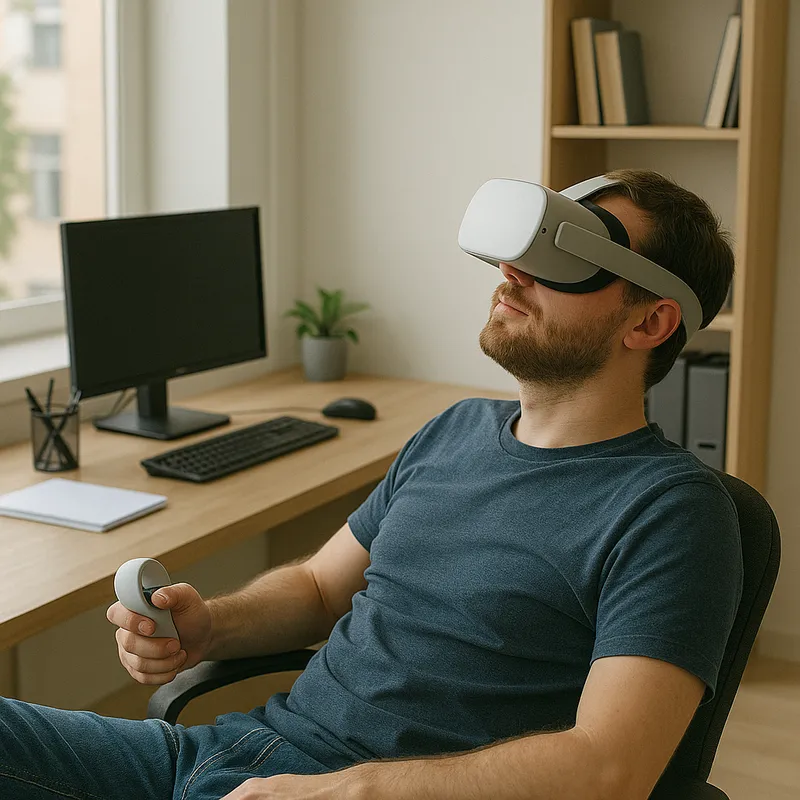
The videos that are used for a virtual smoke school are not immersive - you don't move around in the scene. This is a common misconception. ALT-152 actually has conditions that prevent immersive videos (such as 180° or 360° videos) from being used. The requirement of a virtual reality headset is not to allow the student to interact with the video, it is to block ambient light, ensure viewing angle and set a standard for display quality. Students taking the visual test with the VR Smoke School program remain stationary while taking the test. It's as easy as watching videos and clicking buttons with a mouse. Our virtual smoke school process page explains the process well.
A Not So Obvious Benefit of ALT-152
Smoke generators can drift and change quickly - leaving the student guessing at the answer. ALT-152 requires that the opacity displayed in a video must be within 2.5% of the stated value for the entire duration of the video. Although this makes the process of obtaining videos more difficult for the provider, it makes the test more consistent (and fair) for the student. In-person smoke school has no such requirement.

The Obvious Benefits of ALT-152
We have an entire page dedicated to the benefits of virtual smoke school training. Some of the key benefits are:
- • No scheduling - smoke school is no longer seasonal. You can complete the training anytime.
- • No travel - smoke school is anywhere you want it to be. With our program, all you need is an internet connection.
- • No weather issues - weather and atmospheric conditions have a profound effect on testing consistency at in-person smoke school events.
- • Reduced Cost - The certification cost of in-person smoke school is significantly higher than VR Smoke School as outlined in our smoke school cost comparison.
- • Consistent testing - whether you take the test from Idaho in the winter or Florida in the summer, the test difficulty is the same.
- • Accuracy - students can make more accurate in-person opacity observations because they are provided with a consistent training and testing experience. This is demonstrated in our study comparing students trained with our program vs students trained at in-person smoke schools.

State Recognition of ALT-152
ALT-152 is approved for all federally-regulated sources. Most states (90%+) recognize EPA Method 9 certifications using ALT-152 for state-regulated sources. Our state authorization status page provides information about each state. It is important to note that many states review ALT-152 providers individually. State authorization of one ALT-152 provider does not always extend to another.

Our Knowledge of ALT-152
Our founder, Gabriel Keilholz, developed the concept of using virtual reality for EPA Method 9 certification and wrote the technical requirements of ALT-152. He co-authored the method with the USEPA. No one has more experience with ALT-152 or the knowledge behind the requirements. In addition to this knowledge, the VR Smoke School program is backed by over 45 years of smoke school training experience.
Earn Your EPA Method 9 Certification Using ALT-152
Register for your free account in 30 seconds and get unlimited access to our online lecture and the visual test. Test drive the entire program from any computer or VR headset. Only pay when you pass.