EPA Method 9 vs EPA Method 22
Learn the difference between EPA Method 9 and Method 22. Both are used for visible emissions observations but in very different ways.
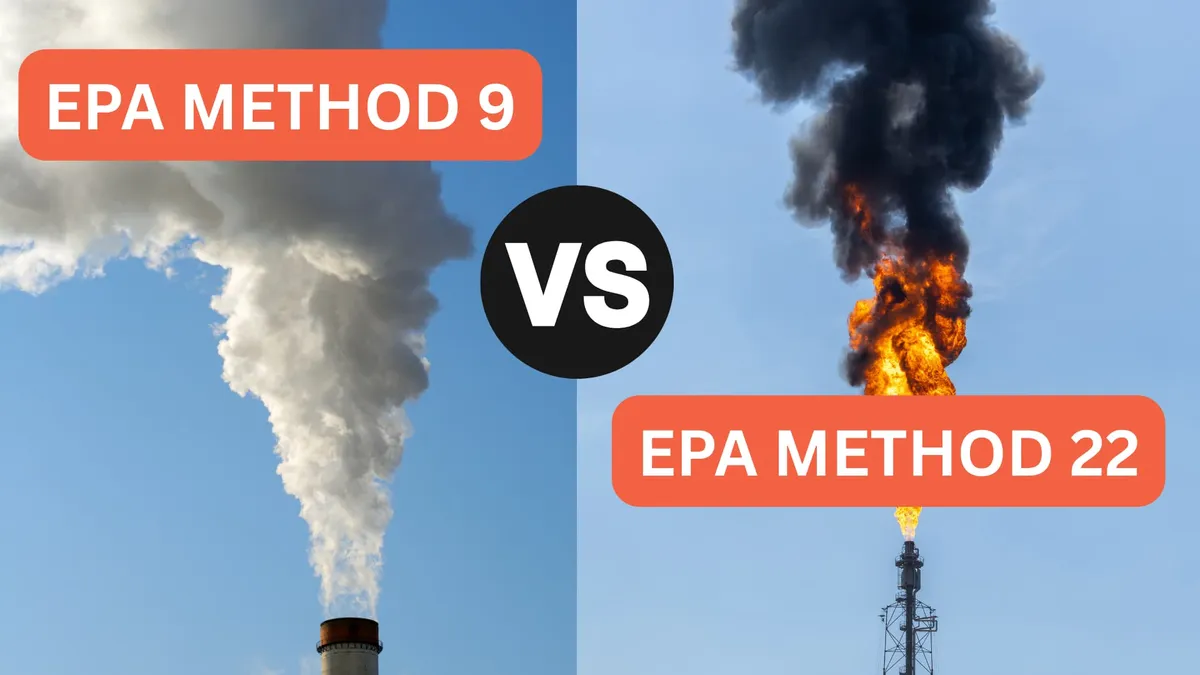
EPA Method 9 vs. EPA Method 22: What’s the Difference?
EPA Method 9 and EPA Method 22 are both used to evaluate visible emissions, but they serve very different purposes. Method 9 is used to determine the opacity level of visible emissions, while Method 22 is used to determine whether visible emissions are simply present or absent.
Understanding the difference is important for facilities, consultants, inspectors and environmental professionals who need to comply with air permits, visible emissions limits or fugitive dust monitoring requirements.
What Is EPA Method 9?
EPA Method 9 is used to visually determine the opacity of emissions from stationary sources. In other words, Method 9 answers the question:
How dense or opaque are the emissions?
A certified Method 9 observer records opacity readings as percentages, usually in 5% increments. These observations are commonly used to demonstrate compliance with opacity limits found in air permits, state regulations and federal requirements.
Because Method 9 produces numerical opacity readings, it is commonly used for formal compliance demonstrations, inspections and enforcement-related documentation.
What Is EPA Method 22?
EPA Method 22 is a visual observation method used to determine whether visible emissions are present or absent. Unlike Method 9, Method 22 does not assign an opacity percentage.
Are visible emissions occurring?
This makes Method 22 useful for screening, monitoring and documenting fugitive emissions from sources such as material handling operations, conveyors, roads, stockpiles, building openings and certain flare-related applications.
Method 22 is qualitative. It tells you whether emissions were observed during a specified observation period, but it does not determine an opacity value.
Side-by-Side Comparison: EPA Method 9 vs. EPA Method 22

| Category | EPA Method 9 | EPA Method 22 |
|---|---|---|
| Purpose | Determines the opacity percentage of visible emissions | Determines whether visible emissions are present or absent |
| Type of Method | Quantitative | Qualitative |
| Result | Opacity percentage (e.g., 5%, 10%, 20%) | Yes/No determination |
| Certification | Required | Not required |
| Common Uses | Compliance testing, inspections, enforcement | Screening, monitoring, fugitive emissions checks |
| Typical Sources | Stacks, vents, process exhaust | Fugitive dust, material handling, roads |
| Best For | Determining how much opacity is present | Determining if emissions are present |
When Should EPA Method 9 Be Used?
EPA Method 9 should be used when a regulation or permit includes a specific opacity limit. It is required when numerical opacity readings are needed to demonstrate compliance.
- Compliance with opacity limits
- Formal emissions testing
- Regulatory inspections
- Defensible documentation
When Should EPA Method 22 Be Used?
EPA Method 22 is used when the requirement is to determine whether visible emissions occurred during a defined observation period.
- Fugitive emissions monitoring
- Routine inspections
- Screening before further testing
- Situations where opacity is not required
Method 22 should not be used when a permit requires opacity percentages.
How to Get EPA Method 9 Certified Online
VR Smoke School provides a flexible way to earn EPA Method 9 certification without attending an in-person smoke school. The process is designed to be simple, efficient and accessible from anywhere.
Students can complete the lecture and practice exams online at their own pace. Once ready, they take the official certification exam using an approved VR headset to ensure consistent viewing conditions that meet EPA requirements.
To learn more about how the program works step-by-step, visit the VR Smoke School process page.
This approach eliminates travel, scheduling constraints and weather variability while maintaining the same certification standards required under EPA Method 9.
Are EPA Method 9 and EPA Method 22 Interchangeable?
No. These methods serve different purposes and are not interchangeable.
- EPA Method 9 measures how much visible emissions are present.
- EPA Method 22 determines whether visible emissions are present.
Using the wrong method can lead to non-compliance or invalid documentation.
Final Summary
EPA Method 9 provides certified, numerical opacity readings required for compliance, while EPA Method 22 provides a simple yes/no determination of visible emissions.
Both methods are valuable, but choosing the correct one ensures accurate observations and proper regulatory compliance.
Get EPA Method 9 Certified Online
Start your EPA Method 9 certification today with a flexible, EPA-approved virtual program.
Register Now